


Supreme Court Rejects Gaming Firms’ Pleas And Upholds Tamil Nadu and Karnataka Online Gaming Ban
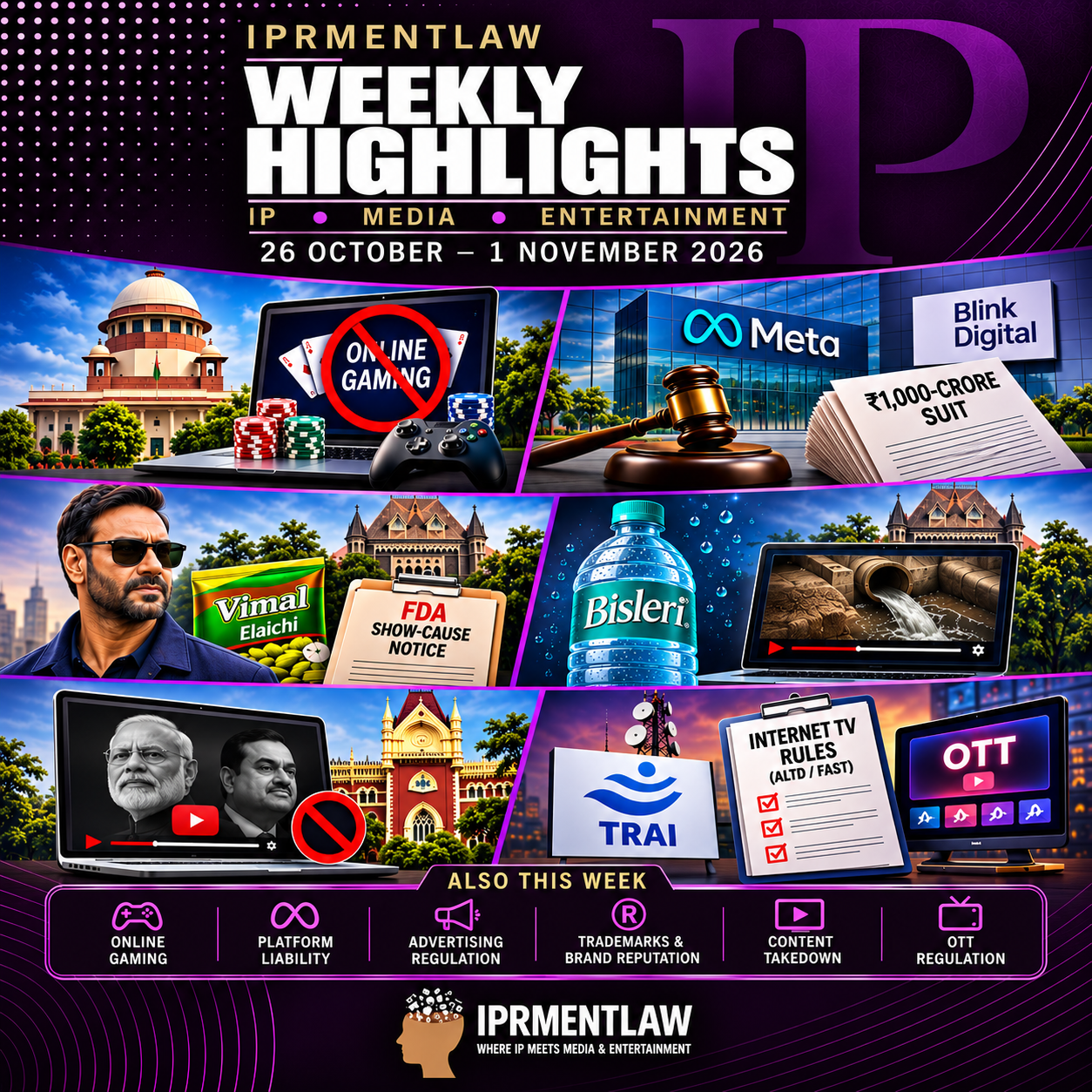
The Supreme Court of India has dismissed a batch of ten review petitions led by Junglee Games India challenging the Court’s earlier May 2026 judgment that upheld the constitutional validity of state laws banning real-money online games in Tamil Nadu and Karnataka. Examining the filings in chambers without an open-court hearing, the Bench observed that it had carefully gone through the review petitions and connected papers and found no merit or sufficient grounds to revisit its earlier verdict.
Earlier, the Madras High Court and the Karnataka High Court had struck down their respective state legislations on the ground that games of skill could not be subjected to blanket prohibitions, a view that the Supreme Court subsequently overturned in May by ruling that classifying a game as skill-based does not place it outside a state’s legislative power to prohibit it when wagering or monetary stakes are involved. With the dismissal of the review petitions, the legal foundation for the state restrictions on real-money online games, including online rummy and poker played for stakes, remains undisturbed.
You can read more about it here.
Bombay High Court Rejects Meta’s Plea to Shift Blink Digital’s ₹1,000-Crore Suit to California
The Bombay High Court dismissed an application filed by Meta Platforms Inc. seeking to transfer a ₹1,000-crore commercial suit filed by digital agency Blink Digital to courts in California, while noting that Meta’s Indian subsidiary, Facebook India Online Services Pvt. Ltd., has an office within the Court’s territorial jurisdiction and had raised no objection to it.
The dispute arose in August 2026 after Meta disabled four of Blink Digital’s business manager accounts along with approximately 9,000 associated advertising accounts, prompting the agency to approach the High Court alleging violations of the Information Technology (Intermediary Guidelines and Digital Media Ethics Code) Rules, 2021. Rejecting Meta’s contention regarding exclusive foreign jurisdiction, the Court observed that a private contract between parties concerning the applicability of foreign law and exclusive court jurisdiction cannot override mandatory statutory provisions in India, nor can significant social media intermediaries benefit from Indian operations while avoiding obligations under Indian law.
You can read more about it here.
Ajay Devgn Moves Bombay High Court Against Maharashtra FDA Notice Over ‘Vimal Elaichi’ Ad
Bollywood actor Ajay Devgn has approached the Bombay High Court challenging a show-cause notice issued to him on August 11, 2026, by the Maharashtra Food and Drug Administration (FDA) over his appearance in advertisements for the mouth freshener ‘Vimal Elaichi’. Invoking Sections 24 and 53 of the Food Safety and Standards Act, 2006, which govern misleading food advertisements and prescribe penalties of up to ₹10 lakh, the FDA alleged that the campaign amounted to surrogate promotion of ‘Vimal Pan Masala’ and gutkha, which are prohibited in Maharashtra.
In his petition, which is slated to be heard by a division bench of Chief Justice Mahesh Chandra Tripathi and Justice Advait Sethna on November 4, Devgn has challenged the constitutionality of the FDA’s regulatory action, contending that he only endorsed the mouth freshener rather than pan masala, that he is no longer associated with the brand, and that the notice was arbitrarily served directly on him as an actor rather than on the manufacturing company. Meanwhile, FDA Commissioner Tukaram Mundhe stated that the department had concluded its preliminary inquiry against Devgn, Shah Rukh Khan, and Tiger Shroff.
You can read more about it here.
Bombay High Court Orders Takedown of Disparaging Video Claiming Bisleri Uses Drain and Toilet Water
The Bombay High Court granted an interim injunction in favour of Bisleri International Private Limited against Meta Platforms Inc. and several other defendants over the circulation of a social media video falsely alleging that Bisleri’s packaged drinking water is manufactured from filtered drain and toilet wastewater. Bisleri submitted that it holds a valid FSSAI central licence until May 2028 with regularly audited facilities, and clarified that an internal enquiry established that the manufacturing premises depicted in the video did not belong to the company or any of its licensees, franchisees, or co-packers.
Observing that the video was prima facie disparaging, denigrating, and plainly malicious, the Court noted that the categorical allegations created a false impression that the plaintiff was selling non-potable water to unsuspecting consumers, which could cause irreversible damage to its goodwill and reputation. Accordingly, the Court directed the removal of the impugned posts across social media platforms, restrained the defendants from repeating the allegations, and granted a dynamic injunction allowing Bisleri to notify platforms of mirrored or reposted links without approaching the Court again.
Case Title: Bisleri International Private Limited v. Meta Platforms Inc. & Ors.
Case No.: Interim Application (L) No. 37662 of 2026 in Suit (L) No. 37659 of 2026
You can read more about it here.
Calcutta High Court Halts Streaming of Sabeer Bhatia’s Video ‘How Modi and Adani Stole India’
The Calcutta High Court issued an interim order directing social media platforms including YouTube, X, and Instagram to block access to a video titled “How Modi and Adani Stole India – The Friendship Files” in a civil defamation suit filed by Adani Enterprises Limited against entrepreneur and content creator Sabeer Bhatia. The petitioner contended that the video made unsubstantiated factual assertions linking the corporate group to narcotics smuggling for terror funding and orchestrating police violence against a farmer, and that shortened clips and re-uploads continued to circulate online even after the original video was disabled in India under Rule 3(1)(d) of the IT Rules, 2021.
Placing the matter in an exceptional class warranting a pre-trial injunction, the Court observed that the video was a dramatised narrative presenting severe criminal allegations as assertions of fact rather than expressions of opinion, without any supporting finding from any authority. While clarifying that the order does not bar constructive criticism or evidence-backed reporting on the petitioner or government policy, the Court held that immediate restraint was necessary as rapid online republication causes reputational injury that cannot be adequately compensated in money.
You can read more about it here.
TRAI’s Proposed Internet TV Rules Trigger Concerns Over Jurisdiction and Wider OTT Regulation
The Telecom Regulatory Authority of India’s (TRAI) recommendations issued on October 26 proposing an authorisation framework for Application-based Linear Television Distribution (ALTD) services, including Free Ad-Supported Streaming Television (FAST) platforms, have raised concerns among industry stakeholders regarding regulatory overreach into the open internet. Following a December 2025 reference from the Ministry of Information and Broadcasting (MIB) aimed at addressing regulatory disparities between traditional television operators and internet-based linear channel distributors, TRAI recommended requiring ALTD providers to obtain Central government authorisation and mandating smart TV and operating system verification.
However, industry bodies and stakeholders such as JioStar have questioned TRAI’s statutory jurisdiction under the TRAI Act, 1997, and the Telecommunications Act, 2023, pointing out that application-layer services do not operate underlying transmission infrastructure or spectrum and that OTT services were consciously excluded from the 2023 Act during its drafting stage. Stakeholders further cautioned that digital platforms are already governed under the Information Technology Act, 2000, and the 2021 IT Rules, warning that regulating internet-distributed linear channels could set a precedent for backdoor sector-specific regulation of broader on-demand OTT content services.
You can read more about it here.
Delhi High Court Restrains Jabsons Foods From Using ‘HOT MIX’ Mark in Trademark Dispute With Shah Namkeen
The Delhi High Court, in Sunit Shah v. Jabsons Foods Pvt. Ltd., 2026:DHC:9547, has restrained Jabsons Foods from using the mark ‘HOT MIX’ for namkeen, snacks and allied products, upholding an interim injunction in favour of Shah Namkeen, which claimed use of the ‘SHAH HOT MIX’ label since 1977. Justice Purushaindra Kumar Kaurav held that Jabsons could not avoid infringement merely by adding its house mark ‘JABSONS’ or changing its packaging, as it had reproduced the dominant feature ‘HOT MIX’ of the plaintiff’s registered label for identical goods. Rejecting Jabsons’ contention that ‘HOT MIX’ was descriptive or commonly used in the trade, the Court observed that photographs of a few third-party products, without evidence of substantial market use, were insufficient to establish that the expression had become common to the trade. Applying the imagination test and competitors’ need test, the Court considered ‘HOT MIX’ a suggestive expression rather than a purely descriptive one and noted that Jabsons had adopted the mark only in October 2023, despite selling other namkeen variants for over 15 years. It also emphasised that ordinary consumers purchasing inexpensive, everyday products such as namkeen are likely to identify them by name, making the likelihood of confusion particularly relevant. Accordingly, the Court allowed Shah’s application under Order XXXIX Rules 1 and 2 CPC and dismissed Jabsons’ application under Order XXXIX Rule 4 CPC, continuing the injunction against use of ‘HOT MIX’ or any deceptively similar mark, while clarifying that the individual words ‘hot’ and ‘mix’ may still be used independently in their ordinary descriptive sense. The Court clarified that its observations were prima facie and would not prejudice the final adjudication of the suit.