



About Author: Namya Agrawal, is a first year BA LLB student at Hidayatullah National Law University
Introduction
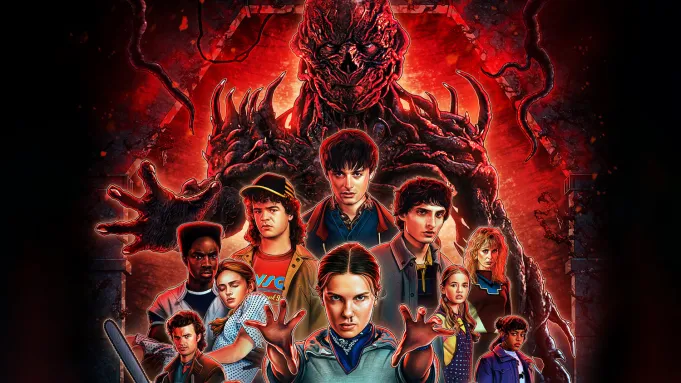
With the newly released season of Netflix’s Stranger Things, discussions and trends around its characters, storyline and cultural impact have taken the global stage once again. The world of the Upside Down, Hawkins and widely renowned character of Eleven has kept the viewers on their toes.
However, beyond the fictional world of Hawkins lies a real-world legal controversy that raises an important question regarding a fundamental principle of intellectual property law, which is “Can an idea be stolen?”
This blog examines the law suit in Kessler v. Duffer, which brought this question before a US court, where the filmmaker Charlie Kessler alleged that the creators of Stranger Things had used his original concept without any authorization. This case raises important concerns regarding implied contracts, idea submissions, and limits of legal protection available to creative idea in the world of entertainment.
Background of the dispute
Charlie Kessler is a filmmaker and alumnus of the University of Illinois Urbana-Champaign, known for his work on documentaries and narrative films. Kessler claimed that the Duffer brothers stole the fundamental concept of Stranger Things from his short film Montauk.
The Montauk Project is claimed to be a secret set of experiments illegally performed by the United States government to develop psychological warfare techniques. Although the theory remains controversial, the main idea behind the project was to conduct experiments on humans and research involving time travel. A concept like that of Stranger Things.
Kessler claimed that he had allegedly shared ideas relating to urban legends and conspiracy theories about an abandoned military base on Long Island, during a brief conversation at a cocktail party at the 2014 Tribeca Film Festival in New York. According to him, the Duffer Brothers subsequently misappropriated his ideas in creating the web series.
Cause of Action- Breach of Implied Contract
This legal dispute is distinctive as it did not follow the conventional path of a copyright infringement claim. Instead, the plaintiff, Charlie Kessler, based his case primarily on Contract Law, specifically alleging the existence of an implied-in-fact contract between himself and the Duffer brothers, Matt and Ross Duffer.
Kessler did not allege that the Duffer Brothers had copied any specific dialogue, scene, or characters from his work. Instead, he argued that an implied contract arose when he disclosed his idea to the Duffers, within an industry context where such disclosures are considered confidential. This choice was strategic as the limitation of copyright law is that it does not protect abstract ideas, themes or concepts.
Concept of an Implied-in-fact Contract
A contract implied in fact consists of obligations that arises from mutual agreement implied through actions rather than being expressed through words. To support a contract implied in fact, facts surrounding the action must display a mutual intent to contract. Contracts like these are legally enforceable provided they show an unambiguous offer, unambiguous acceptance, mutual intent to be bound and consideration. These elements are same as the one in express contracts however, the difference lies in the fact that implied contracts do not require any of these elements to be established through oral or written words. The Duffer brothers later even defended by alleging that they didn’t “manifest any intent to enter into a binding agreement” with Kessler.
Defence by Duffers: Independent Creation
The Duffer Brothers strongly denied the existence of any such implied contract. They contended that no promise — express or implied — was ever made to Kessler. More importantly, they asserted the defence of independentcreation, producing evidence such as emails, draft scripts, and project notes that pre-dated their interaction with Kessler. According to the defendants, these materials demonstrated that the core elements of Stranger Things had already been conceptualised independently, thereby negating any inference of contractual obligation or misuse.
Independent creation is a concept in copyright law asserting that a work, despite any similarities to an existing copyrighted piece, was created entirely on its own. Any similarities arising out of the work is considered to be purely coincidental rather than infringing. It is a fundamental principle of originality allowing multiple persons to own rights in similar works if they existed separately, even if alike, because no access to original existed.
Idea-Expression Dichotomy in Copyright Law
At the heart of this dispute lies one of the most fundamental principles of copyright law, which is the idea-expression dichotomy. Copyright law in most jurisdictions, including India and the U.S., protects the tangible expression of an idea (in this case, a finished script, detailed characters, or recorded music), but not the abstract idea or concept itself. The rationale behind this principle is to prevent monopolisation of ideas while still safeguarding original creative expression.
This stance was famously articulated in the case of Baker v. Selden where the U.S. Supreme Court held that while a book explaining an accounting system may be copyrighted, but the system itself cannot be protected. In the context of the present case of Stranger Things, the concepts cited by the plaintiff, Kessler- secret government experiments, child protagonists, military base- are unprotectable ideas. These ideas lack uniqueness and detailed settings as they have appeared across various fictional works.
Relevance of the case ahead of the upcoming season
As the show releases its fifth and final season, the relevance of Kessler v. Duffer extends beyond legal dispute and into the harsh realities of content creation. With the show evolving into a global franchise like seen before of Harry Potter and Barbie, questions surrounding the ownership of merchandise and spin-offs and even the origin of the show plays a significant role.
Key Takeaways for Content Creators and the entertainment industry
The dispute offers several important precautionary lessons for content creators, film makers, producers, and studios. The case reiterates the limited scope of copyright protection, importance of formalising idea submissions and importance of Non-Disclosure Agreements to ensure confidentiality in the arena of entertainment industry.
Conclusion
Even though the case ended when Kessler dropped the suit just before trial in May 2019, it highlights how early-stage idea submissions, made informally can give rise to legal disputes when a project earns commercial success. While the law does not protect abstract ideas, the growing concept of Non-Disclosure Agreements play a crucial protective role. The dispute also serves as a cautionary reminder for both creators and studios underscoring the need for clear legal boundaries that strike a balance between creative freedom and questions of ownership.
Image source: here








augmentin drug basics
augmentin drug basics
vardenafil 10 mg breakdown
vardenafil 10 mg breakdown
metronidazole gel side effects itching
metronidazole gel side effects itching
semaglutide vs tirzepatide vs retatrutide side effects
semaglutide vs tirzepatide vs retatrutide side effects
sémaglutide comprimés de rybelsus
sémaglutide comprimés de rybelsus
semaglutide waco texas
semaglutide waco texas
sildenafil 100mg moa
sildenafil 100mg moa
vidalista 60mg price
vidalista 60mg price
lasix medicine
lasix medicine
furosemide 40 mg oral tablet
furosemide 40 mg oral tablet
metoclopramide
metoclopramide